
Last Updated on October 10, 2026
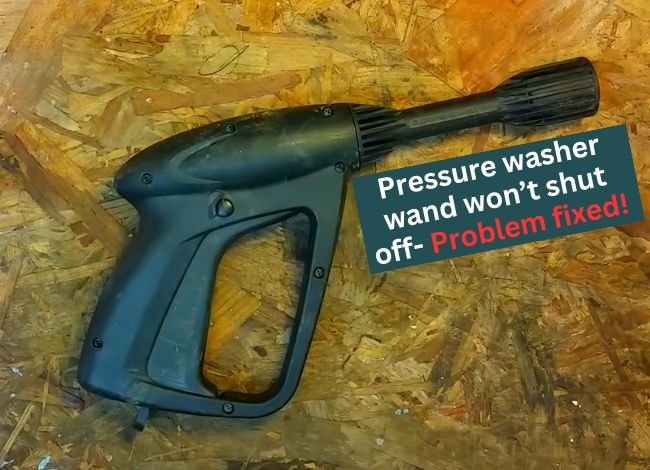
The pressure washer wand helps you control the flow of water while cleaning. When you squeeze the trigger, water sprays through the nozzle. When you release it, the water should stop. But what happens when your pressure washer wand won’t shut off?
This problem can happen because of a damaged trigger gun, a worn internal seal, or a faulty valve. Sometimes, the water stops spraying, but the pressure washer motor continues running. These are two different problems, and finding out which one you have will make troubleshooting easier.
Fortunately, you can check several things before replacing expensive parts. Let’s look at the common causes and how to fix them.
Why Is My Pressure Washer Wand Not Shutting Off?
If your pressure washer wand won’t shut off, start by checking whether water continues spraying after you release the trigger. If it does, the problem is usually inside the trigger gun. If the water stops but the motor keeps running, the cause may be related to the pressure control system.
Reason 01: The Trigger Gun Is Damaged
The trigger gun is responsible for starting and stopping the water flow. When you squeeze the trigger, an internal valve opens and allows pressurized water to pass through the wand.
When you release the trigger, the valve should close and stop the flow.
However, the trigger mechanism can wear out or become damaged over time. Dirt, corrosion, or broken internal components may prevent the valve from closing properly.
As a result, water may continue spraying even after you release the trigger.
Solution
Turn off the pressure washer and disconnect its power source. Shut off the water supply and squeeze the trigger while pointing the wand in a safe direction to release any remaining pressure.
Check whether the trigger moves freely and returns to its normal position. Look for visible cracks, damage, or a stuck mechanism.
If the trigger gun is damaged, replacing it is usually the simplest solution. Choose a replacement compatible with your pressure washer’s maximum pressure, flow rate, and hose connection.
Reason 02: Worn or Damaged Trigger Gun Seals
Inside the pressure washer trigger gun, seals help prevent water from leaking past the closed valve.
These seals can wear out because of regular use, dirt, or damage. When they no longer seal properly, water may continue dripping or flowing from the nozzle after you release the trigger.
Sometimes, the trigger feels normal, but the water does not stop completely. This is a common sign of an internal valve or seal problem.
Solution
Inspect the trigger gun for visible leaks or damage after safely depressurizing the system.
If your model has a serviceable trigger gun, you may be able to replace the internal seals using a manufacturer-approved repair kit.
However, many residential pressure washer guns are not designed to be repaired. In that situation, replacing the complete trigger gun is safer and more practical.
Never try to open the trigger gun while the hose is pressurized.
Reason 03: Unloader Valve Problems
The unloader valve is an important part of many pressure washer pumps, particularly on gas-powered models.
When you release the trigger, the unloader valve redirects the pump’s water flow into a bypass circuit. This prevents excessive pressure from building up while the gun is closed.
If the unloader valve becomes stuck, worn, or damaged, the pressure washer may develop unusual pressure problems.
However, a faulty unloader valve does not normally cause water to keep spraying through a properly closed trigger gun. If water continues coming from the nozzle, inspect the trigger gun first.
Solution
Check your pressure washer’s manual to locate the unloader valve and understand how it works on your specific model.
If the motor struggles when the trigger is released, pressure changes unexpectedly, or the pump does not enter bypass mode correctly, the unloader valve may need attention.
For an example of common pump and pressure problems on a gas-powered machine, see our Ryobi 3100 PSI gas pressure washer troubleshooting information.
Do not randomly adjust the unloader valve. Incorrect adjustment can create unsafe operating pressure and damage the pump.
If you suspect an internal unloader problem, have the valve inspected and repaired or replaced according to the manufacturer’s instructions.
Reason 04: A Faulty Pressure Switch or Total Stop System
Many electric pressure washers have a Total Stop System (TSS). This system automatically turns off the motor when you release the trigger and restarts it when you squeeze the trigger again.
If your electric pressure washer keeps running after you release the trigger, the problem may involve the pressure switch, the shutoff mechanism, or a loss of pressure within the system.
For example, a leaking connection or faulty trigger gun may prevent the pressure washer from reaching the pressure needed to activate the automatic shutoff.
You can see how this feature works on a residential electric model in our review of the Sun Joe SPX3000’s automatic shutoff system.
Solution
Start by checking the hose, spray gun, and connections for leaks. Also inspect the nozzle for blockages, following the manufacturer’s cleaning instructions.
If everything appears normal but the electric motor still runs continuously, the Total Stop System or pressure switch may need professional inspection.
Do not bypass the pressure switch or open electrical components while the machine is connected to power.
What to Check When Your Pressure Washer Wand Won’t Shut Off
Before replacing the wand or trigger gun, a few simple checks can help you find the actual problem.
- Check the trigger: Make sure the trigger returns to its original position when released. A stuck or broken trigger may prevent the water from stopping.
- Look for water coming from the nozzle: A small amount of residual dripping immediately after release may be normal, but continuous spraying suggests the gun valve is not closing properly.
- Inspect the hose connections: Look for damaged O-rings, loose fittings, and visible leaks that may affect the pressure washer’s operation.
- Check the nozzle: A clogged nozzle can cause pressure problems. Remove and clean it only after turning off the machine and releasing the pressure.
- Identify your pressure washer type: Electric models with an automatic stop system behave differently from most gas-powered models.
If your pressure washer wand won’t shut off even after these checks, avoid continuing to use the machine until you identify the problem.
Other Common Issues Related to Pressure Washers
Pressure washers can develop other problems that may seem similar to a faulty wand. Understanding these issues can help you avoid unnecessary repairs.
My Pressure Washer Motor Keeps Running
If your pressure washer motor keeps running after you release the trigger, the first thing to consider is whether you have an electric or gas-powered model.
Electric pressure washers: Many electric models automatically stop the motor when you release the trigger. If your model has this feature and the motor continues running, check for leaks, a faulty pressure switch, or a problem with the automatic stop system.
If you also notice weak water pressure or unexpected shutdowns, the Karcher K1800 electric pressure washer troubleshooting section explains several related problems, including water leaks, clogged nozzles, and power supply issues.
Gas pressure washers: Most conventional gas-powered pressure washers do not automatically turn off the engine when you release the trigger. Instead, the engine continues running while the unloader valve redirects water through the pump’s bypass circuit.
This is normal operation for many gas-powered models.
However, leaving a gas pressure washer running in bypass mode for too long can cause the water inside the pump to heat up. Follow the manufacturer’s recommended bypass time limits to avoid pump damage.
My Pressure Washer Keeps Bursting Hoses
A pressure washer hose can burst because of physical damage, excessive pressure, or the wrong type of replacement hose.
Common causes include:
- Using a hose with a pressure rating lower than the machine requires.
- Driving over the hose with a vehicle or heavy equipment.
- Dragging the hose across rough surfaces.
- Sharp bends, twisting, or repeated kinking.
- Damaged fittings or worn hose reinforcement.
- Exposure to freezing temperatures or improper storage.
Solution
Inspect the entire hose before using the pressure washer. Look for cuts, bulges, cracks, exposed reinforcement, or damaged connectors.
If the hose is damaged, replace it with one that meets the pressure washer manufacturer’s specifications. Do not try to repair a high-pressure hose using ordinary tape or clamps.
Also, make sure the hose is not twisted or trapped underneath heavy objects during operation.
Important: A damaged high-pressure hose can cause serious injuries. Never touch or attempt to stop a pressurized leak with your hand.
My Pressure Washer Keeps Starting and Stopping
If an electric pressure washer repeatedly starts and stops while the trigger is released, it may be losing pressure somewhere in the system.
A leaking trigger gun, worn O-ring, loose fitting, or damaged hose can allow the pressure to drop. On pressure-controlled models, the motor may restart to build pressure again.
Turn off the pressure washer and inspect the connections for leaks. Replace damaged seals or fittings where the manufacturer permits.
If the problem continues without any visible leaks, the pressure switch or internal pump components may need inspection.
When Should You Replace the Pressure Washer Wand?
You do not always need to replace the entire wand when the pressure washer stops working properly.
The wand or lance is the tube that directs water toward the cleaning surface. The trigger gun is the part that controls whether water flows.
If the trigger gun’s internal valve is faulty but the lance is in good condition, you may only need a replacement trigger gun.
However, replacing the damaged component is a good idea when:
- The trigger no longer returns to its normal position.
- Water continues spraying after the trigger is released.
- The gun housing is cracked or damaged.
- The internal valve is worn and cannot be repaired safely.
- The wand or lance has visible structural damage or leaks.
Before purchasing replacement parts, check the pressure rating, flow compatibility, connection type, and your pressure washer’s model number.
Frequently Asked Questions
1. Why does my pressure washer wand keep spraying after I release the trigger?
The most likely cause is a faulty trigger gun valve or worn internal seals. If the valve does not close completely, pressurized water may continue passing through the nozzle. Inspect the trigger mechanism and replace the damaged gun or serviceable components.
2. Should a pressure washer turn off when I release the trigger?
It depends on the model. Many electric pressure washers have a Total Stop System that shuts off the motor automatically. Most conventional gas-powered models keep the engine running while the pump enters bypass mode.
3. Can a bad unloader valve cause pressure washer problems?
Yes. A faulty unloader valve can cause excessive pressure, poor pressure control, engine stalling, or bypass problems. However, it does not normally explain continuous spraying through a trigger gun that should be closed.
4. Can I repair a pressure washer trigger gun myself?
Some trigger guns have replaceable seals or valve components. However, many residential models are not designed for internal repairs. If the manufacturer does not provide an approved repair procedure, replacing the complete trigger gun is usually the safer option.
5. Why does my electric pressure washer keep running when the trigger is released?
If the machine has an automatic stop feature, possible causes include leaking hose connections, a faulty trigger gun, pressure loss, or a damaged pressure switch. Check for external leaks first before considering internal repairs.
6. Is it safe to use a pressure washer that will not shut off?
No. If water continues spraying after you release the trigger, stop using the pressure washer until the problem is corrected. An uncontrolled high-pressure spray can cause serious injuries. Turn off the machine, disconnect its power source, shut off the water supply, and carefully relieve trapped pressure before inspection.
Final Thoughts
If your pressure washer wand won’t shut off, the problem is often related to the trigger gun or its internal valve. A damaged trigger, worn seals, or dirt inside the mechanism can prevent the water flow from stopping.
However, if the water stops spraying but the motor keeps running, check whether your pressure washer is designed to shut off automatically. A gas-powered machine may behave differently from an electric model.
Start with the simple checks before replacing parts. Inspect the trigger gun, look for leaks, and make sure the hose and connections are in good condition. If the problem involves the internal pump, pressure switch, or unloader valve, professional servicing may be the safer choice.