
Last Updated on October 24, 2026
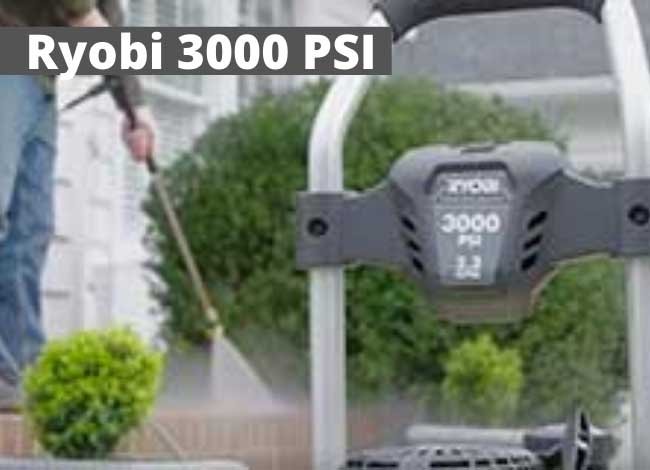
Some household chores cannot be avoided, especially cleaning your sidewalk or driveway. These are among the first areas visitors notice when approaching your home. Using a bucket, brush, or garden hose can be tiring, particularly when dealing with stubborn dirt and grime. Instead, you can use electric pressure washers or gas-powered pressure washers to make cleaning easier. Read this Ryobi 3000 PSI Pressure Washer Review to learn about two powerful gas models and their features.
Related: Ryobi 3100 PSI Pressure Washer Review
When choosing a pressure washer for your home, performance, reliability, and ease of use are important. That’s why many homeowners consider Ryobi pressure washers. The company offers different electric and gas-powered machines for various cleaning tasks.
In this review, we will compare two Ryobi 3000 PSI gas pressure washers: the Honda electric-start RY803000E and the Honda-powered RY803001. Both are older models, so availability may be limited in 2026. However, they remain relevant for existing owners and anyone considering used or remaining retail stock.
Top Two Ryobi 3000 PSI Pressure Washer Comparison
These two pressure washers share several features, including Honda engines, 3000 PSI pressure ratings, onboard detergent tanks, and large wheels. However, they differ in their starting systems, spray nozzles, and hose lengths.
| Feature | Ryobi RY803000E | Ryobi RY803001 |
|---|---|---|
| Maximum Pressure | 3000 PSI | 3000 PSI |
| Water Flow | 2.3 GPM | 2.3 GPM |
| Engine | Honda GCV160 | Honda GCV160 |
| Starting System | Electric start with recoil backup | Recoil start |
| High-Pressure Hose | 25 feet | 35 feet |
| Nozzles | 4 individual quick-connect nozzles | 5-in-1 adjustable nozzle |
| Detergent Tank | Onboard | Onboard |
| Wheels | 12-inch wheels | 12-inch flat-free wheels |
| Warranty | 3-year limited warranty | 3-year limited warranty |
| Best Advantage | Convenient electric starting | Longer hose and 5-in-1 nozzle |
Both machines are suitable for demanding residential cleaning. Your choice mainly depends on whether you prefer the electric-start convenience of the RY803000E or the longer hose and adjustable nozzle of the RY803001.
Ryobi 3000 PSI Pressure Washer Review 2026
Ryobi 3000 PSI 2.3 GPM Honda Electric Start Gas Pressure Washer
The Ryobi RY803000E is a powerful residential gas pressure washer featuring a Honda GCV160 engine and an electric-start system. It delivers up to 3000 PSI and 2.3 GPM, providing enough cleaning power for many demanding household jobs.
With a calculated cleaning-unit rating of 6900 (3000 PSI × 2.3 GPM), this machine can handle dirty concrete, sidewalks, brick surfaces, and other durable outdoor materials. However, maximum pressure and maximum water flow may not occur simultaneously during actual use.
One of its biggest advantages is the electric-start feature, which allows users to start the engine using a button when the battery is properly charged. A recoil starter is also available as a backup.
The durable roll-cage frame protects the engine and pump, while the large wheels make it easier to move around your property.
Technical Specifications of the Ryobi 3000 PSI Electric Start Gas Pressure Washer
| Features | Ryobi RY803000E |
|---|---|
| Model | RY803000E |
| Maximum Pressure | 3000 PSI |
| Maximum Water Flow | 2.3 GPM |
| Engine | Honda GCV160, 4-cycle |
| Pump | Axial pump |
| Starting System | Electric start and recoil starter |
| High-Pressure Hose | 25 feet |
| Wheel Diameter | 12 inches |
| Nozzles | 0°, 25°, 40°, Soap |
| Frame | Protective roll-cage design |
| Fuel Tank Capacity | Approximately 0.25 gallon |
| Detergent System | Onboard detergent tank |
| Power Source | Gasoline |
| Water Capability | Cold water only |
| Weight | Approximately 71.2 pounds |
| Dimensions | Approximately 26.5 × 17.5 × 37.5 inches |
| Warranty | 3-year limited warranty |
| Availability | Discontinued; check used or remaining stock |
When it comes to portability, this is a relatively heavy pressure washer. Nevertheless, the large wheels and comfortable handle make moving it around the driveway or yard manageable.
The 25-foot high-pressure hose provides a useful cleaning range. However, it may require repositioning the machine when cleaning larger areas.
The four quick-connect nozzles include 0-degree, 25-degree, 40-degree, and soap options. Each is designed for a different application.
The 0-degree nozzle produces a concentrated jet and should be used with extreme caution. It can damage surfaces and cause serious injuries. The 25-degree nozzle is useful for durable surfaces, while the 40-degree nozzle offers a wider spray for gentler cleaning. The soap nozzle activates detergent application.
The onboard detergent tank is another convenient feature. You don’t need to carry a separate bucket when applying compatible cleaning solution.
Overall, the RY803000E is a good option for homeowners who already own this model or find one in good condition. Its electric-start system is particularly useful for people who prefer not to rely entirely on a recoil starter.
Pros
- Durable roll-cage construction
- Powerful Honda GCV160 engine
- Convenient electric-start system
- Recoil starter available as backup
- Onboard detergent tank
- Large wheels for maneuverability
- Four quick-connect spray nozzles
- PWMA-tested performance ratings
- Three-year limited warranty
Cons
- Heavier than most compact electric pressure washers
- Requires gasoline, engine oil, and regular maintenance
- Electric-start battery needs charging and maintenance
- Shorter hose than the RY803001 model
- Discontinued, so finding certain replacement parts may be more difficult
Related: Ryobi 1700 PSI Electric Pressure Washer Review
Ryobi 3000 PSI 2.3 GPM Honda Gas Pressure Washer
The second model in our Ryobi 3000 PSI Pressure Washer Review is the RY803001. Powered by the Honda GCV160 engine, this gas pressure washer is designed for tough residential cleaning jobs.
It delivers up to 3000 PSI and 2.3 GPM, making it suitable for removing stubborn grime from concrete driveways, sidewalks, patios, and other durable surfaces.
Unlike the previous machine, this model uses a recoil starter instead of an electric-start system. However, its automatic choke arrangement helps simplify engine starting.
Another excellent feature is the 35-foot non-marring high-pressure hose. It provides a longer working range than the 25-foot hose on the RY803000E, reducing how frequently you need to move the machine.
It also features 12-inch flat-free wheels and a quick-release handle for easier movement and compact storage.
Technical Specifications of the Ryobi 3000 PSI Gas Pressure Washer
| Features | Ryobi RY803001 |
|---|---|
| Model | RY803001 |
| Maximum Pressure | 3000 PSI |
| Maximum Water Flow | 2.3 GPM |
| Engine | Honda GCV160 |
| Pump | Axial |
| Starting System | Recoil start |
| High-Pressure Hose | 35-foot non-marring hose |
| Wheels | 12-inch flat-free wheels |
| Nozzle | 5-in-1 adjustable nozzle |
| Frame | Compact hand-truck design |
| Fuel Tank Capacity | Approximately 0.25 gallon |
| Detergent System | Onboard detergent tank |
| Power Source | Gasoline |
| Water Capability | Cold water only |
| Weight | Approximately 56 pounds |
| Dimensions | Approximately 21 × 21 × 23.5 inches |
| Warranty | 3-year limited warranty |
| Availability | Older model; availability varies |
When it comes to versatility, this gas pressure washer can handle many demanding household tasks. Its 5-in-1 nozzle allows you to change spray patterns without switching between several separate nozzle tips.
The machine also includes an onboard detergent tank. Simply add an approved pressure washer detergent and select the appropriate low-pressure soap setting to apply the solution.
However, the Ryobi RY803001 has a few drawbacks. It still weighs approximately 56 pounds, making it heavier than most portable electric pressure washers.
Also, being gas-powered, it produces more noise and requires regular engine maintenance.
If you prefer a quieter and more compact machine for smaller jobs, consider the Ryobi 1600 PSI electric pressure washer.
Despite these limitations, the RY803001 is a capable pressure washer for homeowners who regularly clean concrete, brick, and large outdoor areas.
Pros
- Sturdy construction
- Reliable Honda GCV160 engine
- Excellent pressure for tough residential cleaning
- Versatile 5-in-1 nozzle
- Large 12-inch flat-free wheels
- Quick-release handle for compact storage
- Long 35-foot high-pressure hose
- Convenient onboard detergent tank
- Three-year limited warranty
Cons
- Louder operation than electric models
- Requires gasoline and routine engine maintenance
- Recoil starting may require more effort
- Heavier than compact electric pressure washers
- Availability may be limited
Ryobi 3000 PSI vs 3100 PSI Pressure Washer Comparison
The Ryobi 3000 PSI and 3100 PSI pressure washers provide similar cleaning capabilities, but their engines, pressure ratings, and accessories vary.
The following comparison focuses on the gas-powered RY803001 and RY803023 models rather than mixing gas and electric specifications.
| Feature | Ryobi 3000 PSI RY803001 | Ryobi 3100 PSI RY803023 |
|---|---|---|
| Power Source | Gasoline | Gasoline |
| Engine | Honda GCV160 | Honda GCV170, 167cc |
| Maximum Pressure | 3000 PSI | 3100 PSI |
| Water Flow | 2.3 GPM | 2.3 GPM |
| Pump Type | Axial | Axial |
| Hose Length | 35 feet | 35 feet |
| Nozzle | 5-in-1 adjustable | 5-in-1 adjustable |
| Detergent Tank | Onboard | Onboard |
| Wheels | 12-inch flat-free | 12-inch flat-free |
| Warranty | 3-year limited | 3-year limited |
| 2026 Product Status | Older model | Discontinued |
The 3100 PSI model offers slightly higher rated pressure and a newer Honda GCV170 engine. However, the difference in pressure is relatively small.
If you already own a functioning 3000 PSI model, upgrading only for the additional 100 PSI may not provide a noticeable cleaning improvement.
Troubleshooting the Ryobi 3000 PSI Pressure Washer
Even a reliable gas pressure washer can develop problems after regular use. The following table covers common issues and practical solutions.
| Issue | Possible Cause | Solution |
|---|---|---|
| Pressure washer not starting | Old gasoline, clogged carburetor, dirty spark plug, or incorrect starting procedure | Replace stale fuel, inspect the spark plug, and follow the correct starting procedure. Service the carburetor if necessary. |
| Electric start not working | Discharged battery, disconnected starter cable, or faulty connection | Check the battery charge and starter connections. Use the recoil starter if permitted by the model instructions. |
| Low or fluctuating pressure | Air in the pump, clogged nozzle, insufficient water supply, or pump problem | Remove trapped air, clean the nozzle, and check water flow. Contact a qualified technician if pressure remains low. |
| Water leaking from pump | Damaged seals, loose fittings, or thermal relief valve operation | Check connections after shutting down and releasing pressure. Replace damaged seals through an authorized service provider. |
| Engine runs but water pressure is weak | Blocked inlet filter, kinked hose, incorrect nozzle, or worn pump | Clean the inlet filter, straighten the hose, and select the correct nozzle. Seek service if the pump is defective. |
| Detergent not dispensing | High-pressure nozzle selected, empty tank, or blocked detergent line | Use the low-pressure soap setting, refill the tank, and inspect the detergent suction system. |
Safety: Always switch off the engine, release trapped water pressure, and allow hot components to cool before inspecting the machine. Never operate a gas pressure washer inside a garage, house, or enclosed area because its exhaust contains dangerous carbon monoxide.
How to Maintain a Ryobi 3000 PSI Gas Pressure Washer
Proper maintenance helps keep your pressure washer working efficiently and may prevent costly repairs.
- Check engine oil: Inspect the oil level before use and follow the Honda engine manual for the correct oil type and change interval.
- Use fresh gasoline: Use the fuel grade and ethanol concentration approved for your engine. Avoid E15 and E85.
- Clean the air filter: Inspect it regularly, especially when working in dusty environments.
- Inspect the spark plug: Check for wear, carbon buildup, or damage.
- Clean the inlet filter: Remove dirt and debris that could restrict water entering the pump.
- Protect the pump: Never run the machine without an adequate water supply, and use an approved pump protector before storage.
- Prevent freezing: Drain remaining water and store the machine in a protected location.
Always follow the maintenance schedule for your specific engine and pressure washer model rather than assuming every Ryobi machine uses the same oil-change interval.
Frequently Asked Questions About Ryobi 3000 PSI Pressure Washers
Can I use a Ryobi 3000 PSI pressure washer to clean my car?
Yes, but 3000 PSI is powerful enough to damage paint and delicate components. Use a suitable low-pressure setting or wider-angle nozzle, maintain a safe distance, and test a small area first. Never direct a concentrated jet at paint chips, seals, sensors, or damaged trim.
What fuel does the Ryobi 3000 PSI gas pressure washer require?
These Honda-powered models use regular unleaded gasoline with an octane rating of 87 or higher. Fuel should contain no more than 10% ethanol. Never use E15 or E85.
How often should I change the engine oil?
Follow the maintenance instructions for your particular Honda engine. The schedule depends on the engine model, operating hours, and conditions. Check the oil level before each use and replace it at the recommended intervals.
Can I use hot water with a Ryobi 3000 PSI gas pressure washer?
No. These models are designed for cold-water operation. Their maximum recommended inlet water temperature is generally 104°F (40°C). Hotter water can damage the pump and seals.
Can a 3000 PSI pressure washer remove driveway stains?
Yes. It can remove many types of surface dirt and grime from durable concrete. Oil stains and deeply embedded discoloration may require a suitable concrete cleaner, pretreatment, or additional cleaning methods.
Why does my Ryobi pressure washer lose pressure?
Common causes include inadequate water flow, trapped air, a clogged nozzle, a dirty inlet filter, or a damaged hose. Check these items before assuming the pump needs replacement.
Can I buy a discontinued Ryobi 3000 PSI pressure washer in 2026?
Some older models may still be available through remaining retail inventory or secondhand sellers. Before purchasing, inspect the pump, engine, hoses, and accessories. Also, confirm that compatible replacement parts are available.
Conclusion
Ryobi offers several capable pressure washers, and the two gas models covered in this Ryobi 3000 PSI Pressure Washer Review are good examples of machines designed for demanding residential cleaning.
Both feature Honda GCV160 engines, durable frames, onboard detergent systems, and enough pressure to clean driveways, sidewalks, patios, and other tough outdoor surfaces.
However, the RY803000E is more convenient for users who prefer electric starting, while the RY803001 offers a longer 35-foot hose and a versatile 5-in-1 nozzle.
Since these are older models, homeowners shopping in 2026 should also compare newer options and check replacement-part availability before purchasing.
Overall, these machines remain useful for existing owners who maintain them properly. Choose the model that best matches your cleaning needs, budget, and preferred features.
Still have a question after reading this Ryobi 3000 PSI Pressure Washer Review? Feel free to comment below.