
Last Updated on October 12, 2026
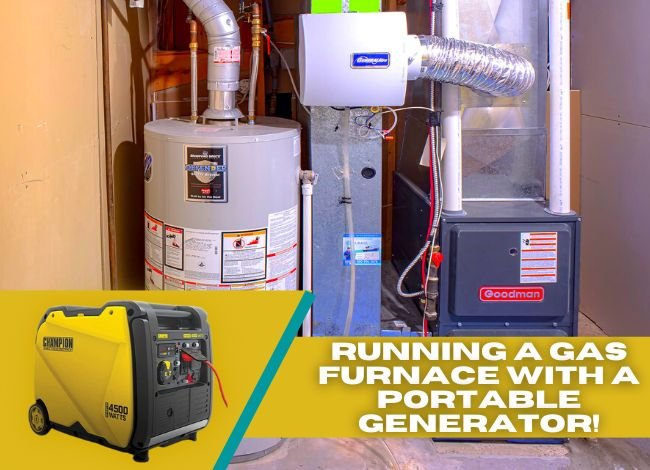
Can you run a furnace with a generator? Yes, you can run a gas furnace with a portable generator if it provides enough electricity and is connected safely. This is especially helpful during a power outage when you need to keep your home warm.
However, a gas furnace does not work the same way as an electric heater. Natural gas produces the heat, while electricity powers the blower motor, ignition system, and controls. Before using a generator, you need to check your furnace’s electrical requirements and make sure the connection is safe.
Can You Run a Furnace With a Generator?
Yes, most modern gas furnaces can operate with a properly sized generator. Even though the furnace burns natural gas, it still needs electricity to start and distribute warm air throughout your home.
The generator must supply enough running watts to operate the furnace and enough starting watts to handle the blower motor when it turns on. Some newer furnaces have energy-efficient motors that require less electricity, while older models may need more power during startup.
For example, a portable generator rated at 3,000 running watts may be sufficient for many residential gas furnaces. However, this depends on the furnace’s actual electrical demand, starting surge, and any additional appliances connected to the generator.
If you are comparing generator options, our Champion 3100 Watt Inverter Generator review explains the running and starting wattage of one portable model.
What Is a Gas Furnace Used For?
In simple words, a gas furnace is a heating system that uses natural gas or propane to produce heat. The furnace burns fuel inside a heat exchanger, and a blower moves warm air through the home’s ductwork.
The electricity does not normally produce the main source of heat. Instead, it operates important components such as the blower, ignition system, draft inducer motor, thermostat controls, and safety devices.

Gas furnaces are commonly rated in BTUs (British Thermal Units), which measure heating capacity. A higher BTU rating generally means the furnace can produce more heat, but it does not automatically mean the furnace needs a larger generator.
Furnace efficiency is measured by AFUE (Annual Fuel Utilization Efficiency). For example, a furnace with a 97% AFUE rating converts approximately 97% of the fuel’s energy into useful heat over a heating season. The remaining energy is lost, mainly through exhaust and other system losses.
Remember that BTU ratings and AFUE ratings do not tell you how many watts the furnace requires. You must check its electrical specifications to choose a suitable generator.
How Can I Run a Gas Furnace With a Portable Generator?
You can run a furnace with a generator, but connecting the two requires care. Most residential gas furnaces are permanently wired into the home’s electrical system rather than connected through a regular power plug.
A qualified electrician should install an approved transfer switch or compatible interlock system before you use a portable generator to power the furnace circuit. Never try to connect a generator directly to the breaker panel or feed electricity through a household wall outlet.
1. Check the Furnace’s Power Requirements
First, check the furnace’s nameplate or owner’s manual for its electrical specifications. Look for voltage, amperage, and any available running or startup power information.
Most residential gas furnaces in the United States use 120-volt electrical power, but requirements vary by model. If you cannot determine the electrical load, ask an HVAC technician or electrician to check it.
2. Make Sure a Transfer Switch Is Installed
A transfer switch allows selected household circuits to receive electricity from either the utility supply or a generator without connecting both sources together.
It prevents backfeeding, which can send generator electricity into utility power lines and endanger electrical workers. A properly installed, approved panel interlock may also be suitable in certain electrical systems.
Not every home has a transfer switch, and it is not necessarily located beside the main breaker panel. If your home does not have an approved generator connection, contact a licensed electrician before attempting to power the furnace.
3. Position the Generator Outdoors
Place the portable generator outside, at least 20 feet away from your home, with the exhaust pointed away from windows, doors, and ventilation openings.
Never operate a fuel-powered generator inside a house, garage, basement, or enclosed porch, even with doors or windows open. Generator exhaust contains carbon monoxide, a poisonous gas that can cause serious illness or death.
Make sure your home has working carbon monoxide alarms. Protect the generator from rain and snow using a manufacturer-approved outdoor shelter that maintains proper ventilation.
4. Switch to Generator Power Safely
Once the generator connection has been professionally installed, follow the transfer switch manufacturer’s instructions for changing from utility power to generator power.
Start the generator according to its owner’s manual and allow it to stabilize before applying the permitted electrical loads. Then operate the transfer equipment as instructed and turn on the furnace circuit.
Do not assume that switching off the main breaker alone makes a direct generator connection safe. The approved transfer equipment must prevent both power sources from being connected at the same time.
5. Test the Furnace
Set the thermostat to call for heat and check whether the furnace starts normally. Listen for the blower and confirm that warm air comes through the vents.
If the furnace fails to start, repeatedly shuts down, or displays an error code, turn it off and have the setup checked. Do not bypass any furnace safety controls.
Some furnaces are sensitive to generator voltage, frequency, grounding, neutral configuration, or power quality. A qualified professional can determine whether the generator and furnace are compatible.
How Many Watts Does a Generator Need to Run a Furnace?
The generator size depends primarily on the electrical demand of the furnace’s blower motor and other components, not just the furnace’s heating capacity.
Many residential gas furnace blowers require several hundred watts during normal operation, but older motors may need considerably more power when starting.
The following figures provide general examples of blower motor electrical requirements. Actual furnace demand may be higher because the system also operates an inducer motor, ignition components, and electronic controls.
| Furnace Blower | Approximate Running Watts | Approximate Starting Watts |
|---|---|---|
| 1/3 HP blower | 700 W | 1,400 W |
| 1/2 HP blower | 800 W | 2,350 W |
These are planning estimates, not guaranteed requirements for every furnace. Newer variable-speed ECM motors can have different electrical demands and starting characteristics.
For example, if a furnace requires 800 running watts and approximately 2,350 starting watts, a generator must be able to handle both demands, along with the electrical loads of any other appliances being used.
Leaving some additional capacity is also helpful because continuously operating a generator at its maximum rated output can cause unnecessary strain. Always compare the furnace specifications with the generator’s continuous and surge ratings.
How Can I Select a Suitable Generator for Running a Furnace?
An undersized generator may struggle to start the furnace blower, overload, or shut down. Choosing a generator with adequate capacity can help prevent these problems.

Not all generators are suitable for all furnaces. Before selecting one, consider the following factors.
Size of the Furnace
A furnace must have enough heating capacity to keep the house warm. A system that is too small may struggle during extremely cold weather, while an oversized furnace may cycle frequently and reduce comfort.
However, a large furnace does not always require a proportionally larger generator. Two furnaces with similar BTU ratings can have different electrical requirements depending on their blower motors and other components.
Weather Conditions
Weather affects how often and how long your furnace runs. During very cold weather, the furnace may operate for longer periods to maintain a comfortable indoor temperature.
This increases the amount of generator fuel needed over time, although it does not automatically increase the furnace’s maximum electrical wattage.
Cold conditions can also make it harder to start a generator, so follow the manufacturer’s recommendations for engine oil, starting procedures, and outdoor operation.
Power of the Furnace
Gas furnaces are available in different heating capacities, including models rated around 40,000, 60,000, 80,000, or 100,000 BTU per hour.
These figures describe heating output or input capacity, depending on the specification. They should not be confused with the watts needed to run the furnace’s electrical components.

The most useful specifications for generator selection are the furnace’s electrical voltage, current, normal operating power, and motor starting requirements.
Generator Power Quality
Modern furnaces contain electronic control boards that may be sensitive to unstable voltage or frequency. A generator should supply power that meets the furnace manufacturer’s requirements.
An inverter generator can be a useful option because many models provide stable electrical output with relatively low harmonic distortion. However, an inverter generator is not automatically compatible with every furnace.
Generator grounding and neutral arrangements can also affect furnace operation. Have an electrician confirm the correct setup rather than modifying the furnace wiring yourself.
Fuel Capacity and Runtime
If you expect a long power outage, check how long the generator can operate on a tank of fuel. Runtime depends on its fuel capacity, engine efficiency, and the electrical load.
A generator running only a gas furnace may consume less fuel than one simultaneously powering a refrigerator, lights, and several other appliances.
If you prefer battery-powered backup equipment without an engine or exhaust, you can also explore our Jackery portable power station review. Keep in mind that a battery power station must still meet the furnace’s starting requirements, provide a suitable electrical connection, and have enough battery capacity for the desired runtime.
Can a Furnace Be Damaged by Running With a Generator?
Yes, a furnace can experience electrical problems if it receives unstable power or is connected incorrectly. However, a properly sized, compatible generator with an approved connection can safely operate many gas furnaces.
For example, a generator rated at 5,500 running watts may have enough capacity to power a typical gas furnace and some other essential appliances. The actual result depends on the furnace’s electrical requirements and the combined load.
The main risks include:
- Low voltage: An overloaded generator may fail to provide sufficient voltage for the furnace motor and controls.
- Unstable frequency: Poorly regulated generator output may interfere with equipment operation.
- Incorrect grounding or neutral configuration: Some furnace systems may fail to operate correctly or present electrical safety risks.
- Improper wiring: Unsafe connections can damage equipment and create serious shock or fire hazards.
- Insufficient starting capacity: A generator that cannot handle the blower’s starting surge may trip or shut down.
A generator with a higher wattage rating does not automatically force extra electricity into the furnace. The furnace draws the electrical power it needs, provided the generator supplies the correct voltage, frequency, and compatible power characteristics.
You should also never attempt to combine the outputs of two ordinary generators simply to increase wattage. Parallel operation is only suitable when the generators are specifically designed for it and connected using manufacturer-approved equipment.
Why Won’t My Gas Furnace Run on a Generator?
Sometimes, a generator starts normally but the furnace refuses to operate. This does not always mean that the generator is too small.
Possible reasons include insufficient starting power, incompatible grounding or neutral arrangements, incorrect voltage or frequency, a tripped breaker, or a problem with the furnace’s electronic controls.
Some modern gas furnaces use flame-sensing systems that can be affected by an unsuitable electrical supply or grounding arrangement.
Before assuming the furnace is damaged, check whether the generator shows an overload warning and whether other permitted appliances operate normally. If the furnace still will not start, contact an HVAC technician or electrician.
Do not disconnect grounding wires, bypass safety switches, or change the neutral wiring to make the furnace operate.
Important Safety Tips When Using a Generator With a Furnace
A generator can be extremely useful during winter outages, but safety should always come first.
- Operate fuel-powered generators outdoors, at least 20 feet from the home, with exhaust directed away from openings.
- Never use a generator inside a garage, basement, or enclosed area.
- Use a professionally installed transfer switch or approved interlock system for household circuits.
- Never connect a generator to a wall outlet to power the house.
- Keep working carbon monoxide alarms inside the home.
- Protect the generator from moisture without blocking necessary ventilation.
- Turn the generator off and allow it to cool before refueling.
- Follow the generator and furnace manufacturers’ operating instructions.
- Do not overload the generator by connecting too many appliances.
- Have a professional check any unusual furnace operation, wiring problem, or repeated shutdown.
Frequently Asked Questions
Can a 2,000-watt generator run a gas furnace?
A 2,000-watt generator may run some gas furnaces, especially models with efficient blower motors. However, it might not provide enough starting power for an older or larger blower. Check both the furnace’s electrical requirements and the generator’s continuous and surge ratings.
Can a 3,500-watt generator run a furnace?
Yes, many residential gas furnaces can operate with a properly connected 3,500-watt generator. However, you still need to consider starting watts and any other appliances using the generator.
Can you run a furnace with a generator all night?
Yes, if the generator is rated for the required operating period, has enough fuel, and is installed and operated safely. Keep it outdoors in a properly ventilated location and follow the manufacturer’s instructions. Never bring it indoors, even in extremely cold weather.
Do I need a transfer switch to run my furnace on a generator?
For a furnace powered through household wiring, an approved transfer switch or suitable interlock arrangement is generally required to isolate generator power from utility power. Other approved connection arrangements may be possible depending on the furnace and local electrical requirements. Consult a licensed electrician.
Will a gas furnace work during a power outage without a generator?
Most modern gas furnaces will not operate during a power outage without electricity. They need power for the blower motor, ignition system, and electronic controls, even though natural gas supplies the heat.
Can I use an inverter generator to run my furnace?
Yes, many inverter generators can power gas furnaces if they provide enough starting and running watts and meet the furnace’s electrical requirements. Check voltage, frequency, grounding, neutral compatibility, and the approved connection method before use.
Summary
Can you run a furnace with a generator? Yes, a portable generator can be a practical backup power source for a gas furnace during an outage.
The most important thing is choosing a generator with enough running and starting watts for your furnace. Remember that furnace BTU ratings measure heating capacity, while generator wattage determines available electrical power.
Before using a generator, make sure the electrical connection is professionally installed and the generator is operated safely outdoors. With the right equipment and proper precautions, you can keep your gas furnace working when utility power is unavailable.